How One Free Program Is Reaching 1 Million Kids Worldwide With Life-Saving Depression Education
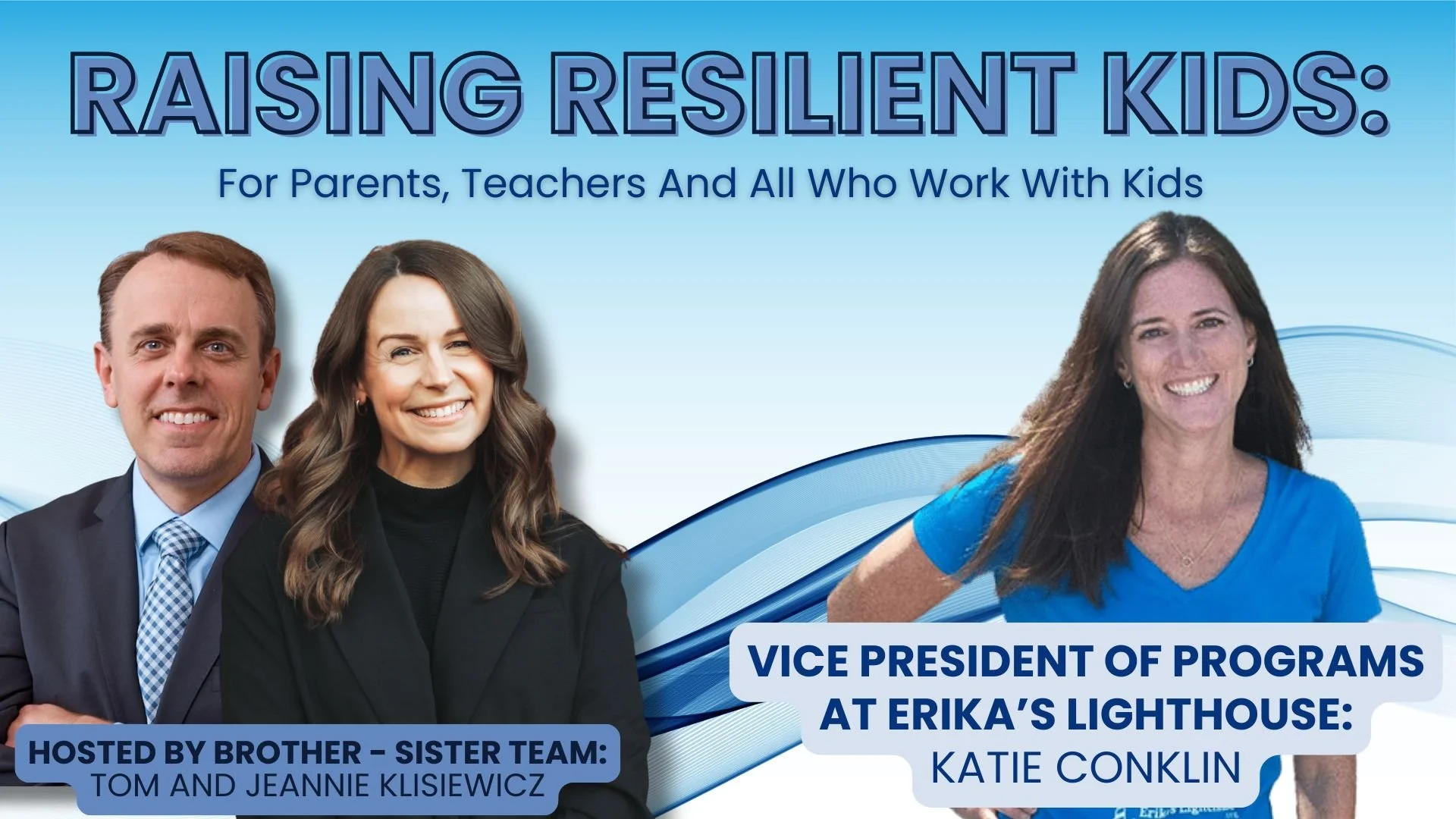
Check out the podcast on…



Over 1 million students worldwide are learning to recognize depression, find trusted adults, and ask for help - and every resource is completely free.
In this episode, we sit down with Katie Conklin from Erika's Lighthouse to explore how their evidence-based mental health education programs are reaching students across the globe - from California classrooms to schools in Madagascar - with tools that are proven to increase help-seeking behavior, knowledge, and coping strategies.
Discover their approach that makes depression education accessible, relatable, and effective. Katie shares the four-pillar framework transforming school cultures.
You'll learn:
Why "depression education IS suicide prevention" creates a broader, more effective impact
The specific warning signs that educators and parents should watch for (and why they're different for every kid)
How to start a student-led mental health empowerment club at your school
Where to find free family workbooks that demystify therapy, insurance, and mental health jargon
Real stories of impact - including the fourth grader who disclosed suicidal thoughts after a single wellness lesson
Everything Erika's Lighthouse offers is completely FREE and available at erikaslighthouse.org. Within 10 minutes of creating an account, you'll have access to videos, workbooks, conversation starters, and step-by-step guides for implementing these life-saving programs.
Guest Bio
Katie Conklin joined Ericka’s Lighthouse in August 2021. She has a Master’s degree in Human Services and Counseling from DePaul University. Katie has over 20 years of experience working in behavioral health and nonprofit administration. Katie is passionate about mental health awareness in schools and is excited to be a part of the Erika’s Lighthouse team.
About Erika’s Lighthouse
Erika’s Lighthouse is dedicated to empowering students with a lifeline for a lifetime.
They provide the leading depression education and suicide prevention curriculum in the U.S. A curriculum that is easy for busy educators to implement and is 100% free.
Their goal is to equip every student with the skills and knowledge to recognize early signs of depression and take action. Key components of their programs include:
✓ Entirely FREE
✓ Peer-to-peer approach
✓ 1:1 support
✓ Skills-based curriculum built by experts
✓ User-friendly & perfect for busy educators
Learn more: erikaslighthouse.org
Thank you
Thank you for listening to the Raising Resilient Kids Podcast! We are siblings on a mission to help kids become their strongest selves. Each episode, we share proven strategies with parents, teachers, and all who work with youth and teens to build resilient, confident kids who can tackle life's challenges and thrive.
For more information on the podcast, or if you have a question you would like answered by one of our expert guests, please visit us at –
https://www.smarthwp.com/raisingresilientkidspodcast.
A Special Thanks to our Sponsors
Episode Transcript
Tom: In this episode, we sit down with Katie Conklin from Erika's Lighthouse to explore how free evidence-based mental health education is reaching over a million students worldwide from classroom lessons that help kids recognize warning signs to student-led empowerment clubs that are changing school culture.
You'll discover practical tools that work for teachers, parents, and kids alike. Plus hear powerful stories of how these programs are literally saving lives. I'm Tom…
Jeannie: ..And I'm Jeannie. We are siblings on a mission to help kids become their strongest selves. Each episode we share proven strategies with parents, teachers, and all who work with youth and teens to build resilient, confident kids who can tackle life's challenges and thrive. Welcome to the Raising Resilient Kids Podcast.
Tom: Jeannie, a few weeks ago I was at the Indiana PE and Health Teacher Conference, and I saw our old podcast friend, Cassie Brooks.
Jeannie: Oh, Cassie.
Tom: Yes. What is one fun fact you remember about [00:01:00] Cassie?
Jeannie: Okay. Well, Cassie gave us a lot of good information, but if you're gonna ask me for the fun fact, it's that she manages a graveyard! Because who does that? Who does
Tom: It’s so strange. Yeah, yeah, yeah. Um, but another thing we learned about Cassie that she kind of introduced me to two years ago at tthe PE Health Teacher Conference was Erika's Lighthouse. We kinda shared some of that information.
After I heard about it from her I went on their website. They've got so much information, so like curriculums for, for teachers, but they've got stuff for parents and for families as well. And that's when I said, all right, we gotta try to get Erika's Lighthouse on the podcast here to share all the great information because there's a ton of information and it's all free.
As a result, I reached out to Erika's Lighthouse and got in touch with, uh, Katie Conklin. Katie was kind enough to join us for the podcast, so we are so excited to have her here!
Jeannie: Amazing!
Tom: She joined Erika's Lighthouse in August of 2021. She has a Master's degree in human services and counseling from DePaul University. Katie has over 20 years of experience working in [00:02:00] behavioral health and non-profit administration.
Katie is passionate about mental health awareness in schools and is excited to be a part of the Erika's lighthouse team. So, Katie, thank you for joining us.
Jeannie: Katie!
Katie: Thanks for having me.
Tom: Thank you. Thank you. Um, maybe I guess to kick it off, maybe if you could tell us a little bit more about Erika's Lighthouse, the mission, how did it come to be? All of those detail
Katie: Sure, I'd love to. So Erika's Lighthouse was founded in 2004, by Ginny and Tom Neuckranz, um, after the loss of Erika, she was 14. She was at the end of her eighth grade year when she died from her depression. And it was the second suicide in Winnetka, um, Illinois. And it was really the community and Erika's friends who came together and said we need to raise awareness around adolescent depression. We need to encourage good mental health and really break down the stigma that surrounds mental health issues.
And so fast forward 20 years. Um, that's what we do today. We work from the framework of four [00:03:00] pillars, and we focus strictly on schools. So, you know, it was really important to Erika's family that our programs really remain in schools. Kids spend, um, many hours of their waking days in schools, and so they really wanted to bring these programs into schools.
Um, and one of the things that was really important to them is being focused in schools, was really that our programs remain free. And so here we are all these years later that everything that we do for schools is completely free to any school, anywhere. We are, in fact, we're an international program.
We have impacted over a million kids last year with our educational programs.
Do work from the framework of four pillars, so classroom education, so really student facing instruction, um, empowerment clubs, so really student led, good mental health clubs, family engagement resources, and then school policy and staff training.
Tom: Maybe if you could dive a little bit more into some of those programs that, that, that you have.
Katie: So when we think about [00:04:00] school, um, classroom education. We, for those of you who are in the education space, um, you might be familiar with MTSS, multi-tiered systems of support. Erika's Lighthouse really comes from a foundational piece of that tier one education. We want all kids to be educated on Erika's Lighthouse, right? Every single kid in the classroom. So we want all kids to know about what is mental health? What is depression education? We know that a lot of schools will tell us that they're having a lot of tier two, tier three intervention, right? Like they're spending a lot of time doing kind of crisis based work and we really wanna come in at that prevention space. If we can really try and help all kids be educated earlier, we're really trying to help do that lightning the load work.
Our classroom education pillar is really three levels of classroom education.So grades 4 to 12, they're video based lessons. Level one is we all have mental health. It's a [00:05:00] five minute animated video. Talks about everyday feelings versus overwhelming feelings.
Has a really strong focus on health seeking. Um, so all of our programs are really focused on identifying a trusted adult, right? We want kids to always know kind of like, who are my trusted adults? Who can I go to if I feel like I need help, whether that be at home, at school, in the community. And then coping strategies, like how do I take care of my mental health?
And then our level two and level three programs, so kind of loosely middle school and high school, use real kids who talk about their real experiences.
So they are video based lessons, but they're real kids who have chosen to share their story. And we are so proud, I mean, that's like one of the highlights of my career is being able to film these kids, to have them like go and tell their story and be brave enough to share their story with kids all over the country.
They resonate with the kids who sit in classrooms all over the country because we [00:06:00] know that that's who kids are gonna listen to.
Jeannie: Mm-hmm.
Katie: Um, and so these kids come and they talk about what their own personal journey was like, but they also talk about who their trusted adults were, who supported them in their journey, what their good mental health strategies were like.
Tom: Those kids are incredible to be able, you know, brave enough to do that. It's not as much as it was in the past, but there definitely is that kind of stigma around mental health still out there. And especially like a middle school kid, that they're so self-conscious around that stuff.
Is there anything that your programs kind of do to, to help kind of draw that out, you know, make people, make it safe for, for kids to talk about this
Katie: Yeah, I mean, I think it's really multifaceted. Erika's Lighthouse really is a culture change. We are not just a one and done, check a box program. Um, we really believe that a, a school should have all four of these programs in their building.
We don't believe that it needs to all be our programs, but we do believe that every school [00:07:00] should use classroom education, should have an empowerment club, should be educating families around mental health, and should make sure that all of their staff are trained that's what's really gonna create an inclusive school culture around mental health. But then in addition to that, a tagline of Erika's Lighthouse is depression education is suicide prevention. So when we think about what does that mean, that's really when you think about it from a standpoint of stigma when we're talking to kids.
Most people know someone who might have experienced depression, right? So it's a lot more relatable to kids versus suicide. When we talk about depression, it's, it can be common, it can be more relatable. Kids can really kind of, they can understand it.
And it affects more people, right? But it can impact a student's ability to learn and perform and it can impact their attendance and their cognition. And so we [00:08:00] really wanna be able to impact a broader number of students.
So that depression education is suicide prevention. It really does then allow for us to really make sure that we're impacting the full student body and like really be able to kind of normalize those conversations.
We're also making sure that we're having a culture of change in terms of that prevention and early identification. We absolutely want kids to understand signs and symptoms, but more than that is we really want kids to understand who are my trusted adults. How do I seek help if I need help, not just today, but maybe a year from now, five years from now, right?
So we really are kind of normalizing those conversations and just kind of if everyone in a building knows where to seek help, then the stigma isn't, isn't as great around seeking help.
Jeannie: To be able to actually have kids thinking about, okay, who would I go to if that [00:09:00] moment come up came about where they needed to talk to someone, that is just something that they don't even need to think about. They just know.
Katie: One of the things that I think is really great about Erika Lighthouse is that it's really tangible and practical. And so one of the resources on our resource portal, and that's where all of our stuff lives, it lives on a resource portal.
Is what we call our Beacon of Hope signs. And so what we encourage schools to do is to print off these Beacon of Hope signs and ask teachers to post that Beacon of Hope sign on their classroom door or on a window or on a clipboard. And it just alerts kids, students to say like, I'm a trusted adult.
It’s never a teacher's job to diagnose or to treat, but they, they can be a trusted adult. And so we need all the people in a school building to really understand the language and that shared vocabulary. And those are just little simple things that we can do to build a culture of care [00:10:00] in a classroom, in a school.
Tom: I think that's so wonderful. 'cause it is, you know, just me as a parent or you know, teachers too, sometimes you're, you're, I, I don't have these skills. I didn't go to school for this, but you just have to care. You just gotta be there to kind of listen and then point them in the right direction.
You mentioned a couple times, and this was one of the things that, that I, when I was looking on, on the website that really kind of piqued my curiosity was those empowerment clubs.
Katie: So our empowerment clubs, we have over 170 to date. Um, and they are student led good mental health clubs. So they're not, they're not meant to be therapeutic. They're really meant to be student led clubs. And they're really an opportunity for kids to really lead initiatives throughout the building and to normalize conversations, right?
Maybe they're during suicide prevention week, they're going to do initiatives throughout the school to just to again, promote positivity. During, um, finals week, maybe they're gonna do an activity where it's gonna like shred your stress, right? We're gonna go and we're [00:11:00] gonna literally shred our papers after finals. So the goal of those clubs is really to, again, to be those trusted peers. We have two types of clubs, an official Erika's Lighthouse Club, which just really means that they use Erika's Lighthouse in their club name we will actually pay that club up to $500 a year to run. So we reimburse them for their activities and their materials and their snacks. I always say kids don't wanna come if there's not food,
Tom: Yeah, right.
Jeannie: Me either,
Katie: We give them over 60 different activities that are on our resource portal for ideas It might be something around education, around depression, education, or um, anxiety. Or, I mean, honestly I'll say that the kids are so creative that normally the clubs come up with something, they send us the idea, and then we turn it into an awareness, into an action idea.
Jeannie: I'm sure.
Katie: But we also [00:12:00] have affiliate clubs and so those might be clubs that already exist in a school and they are affiliating with us because maybe that's an arm of a club that wants to you know, raise awareness around mental health within their school.
Our clubs do do a mental health leadership academy training because we know that peer to peer, those kids are in front lines every day. Right. And that's a really important piece of that, like making sure that kids understand kind of that trusted peer component.
Um. Certainly, again, not to diagnose, um, but to understand that what do I do if I'm concerned about my friend or a peer, how do I support getting that person to help? Um, because that's a really important component of, um, of help seeking.
Jeannie: Would, like, a school would just reach out to you and that, you know, like what is that program like for those students?
Katie: So, um, I would say normally it's kind of student driven. They do need an advisor. Um, so an [00:13:00] advisor would create an account on a resource portal. They fill out a form, we will give them, you know, all of the tools that they need. We have an amazing empowerment club coordinator who will help walk them through, like, how do I recruit members? How do I, you know, what are my first activities that I need to do?
All of it is there. And so you can go to http://erikaslighthouse.org/ and it's all kind of pretty turnkey.
Tom: So you mentioned some of the videos are like five minutes long. So is it like recommended? Do you do like one a week? What? What's the, the cadence?
Katie: Yeah, so the classroom education has two options. Each level is either a four day program. It fits into a standard class period. So between the 35 minute to a 40 minute lesson, or each level has a one day lesson, which is a condensed version of that full program.
So our full program meet meets national health ed standards. And we as the education team help schools think that through, right? Like, how do, where does this fit? Does it [00:14:00] fit in homeroom? Does it fit in advisory? Some schools teach it during, in September and they do the four lessons, you know, every Tuesday in a month. Some of them, it's like they do one lesson because that's, you know, that's what they can manage to do. And so it's like, but our research shows that, that one lesson is getting kids what they need.
So it is increasing their help seeking, it is increasing their knowledge and it is increasing their coping strategies.
Tom: Can you, can you maybe give us an example of a student, you know, or, you know, uh, middle school, high school, elementary school, , that really benefited from the resources and the education that Erika's Lighthouse provided?
Katie: so we are a train the trainer model. So we don't always get to hear firsthand, um, how our programs impact students, right? And so we rely heavily on the people who use our programs to give us a testimonial. So if it's okay, I brought a few and I thought I could just [00:15:00] read, um, what they said.
Is that okay?
Jeannie: Yeah.
Tom: Yep.
Katie: All right. So I'm gonna read a couple. Um, so this is from a school counselor in Madagascar.
Tom: Wow. Holy cow.
Jeannie: I was like, Madagascar, Indiana. Like, okay,
Tom: Like the movie Madagascar?
Katie: Like the country. So they say, “I hope you won't mind this long email, but I must take the time to express my deepest gratitude for incredible work you do. Through Erika's Lighthouse. I have used other mental health programs in the past. That were not only expensive, but also ineffective and lacking in meaningful resources. The services you offer have a profound positive impact on students' wellbeing worldwide, and I genuinely believe they save lives. I have many students on my caseload who are directly benefiting from your resources. Living and learning in Madagascar comes with unique challenges. Our students and families navigate political instability, [00:16:00] inconsistent access to water and electricity, and the realities of daily life in a developing country.
Beyond that, it's an international school with high mobility. Many of our students go through a grieving process each year as they say goodbye to friends they may never see again. These transitions combined with the typical challenges of adolescents make mental health support not just important, it's essential.
Teaching mental health awareness is challenging work. The content can be triggering for some students, and finding the right approach requires both care and expertise. What I deeply appreciate about your curriculum is the way information is presented. It doesn't just help students understand what to do in an emergency or how to simply be okay.
It teaches them how to thrive. The distinction is everything, especially for students navigating such complex circumstances from the bottom of my heart. Thank you. You truly are a lighthouse. Especially during the times that may seem impossibly dark so many of our young people. The work you do matters more than words can express.”
Jeannie: Oh my gosh. That's like should be your commercial
Tom: Yeah. [00:17:00] Right.
Katie: There is one more that I have.
Jeannie: Yes, please share.
Katie: This is from a district level administrator in California sharing from some, from a school counselor who taught our program that was sending an email to her. “I wanted to take a moment to share an important and deeply meaningful win that occurred following yesterday's wellness lesson on mental health.
Shortly after the presentation, a fourth grade student asked to check in. During our conversation, she was able to bravely share thoughts of suicide. Something she had not previously felt safe or ready to express because of the lesson and the safe space it created, she found the courage to speak up. As a result, we were able to immediately ensure her safety and connect her with appropriate mental health resources.
It was a powerful reminder of how essential the lessons are and how impactful it can be, especially when it comes to early intervention and emotional support. Thank you for your continued efforts on these, the continued support of these wellness efforts. Yesterday was a win [00:18:00] in every sense of the word.
Tom: Wow. Fourth grade.
Katie: We feel really grateful when people share with us how our programs impact them. But we do know that they're making an impact
Tom: Yeah, you're making a huge difference in the world. Are there any warning signs people should look for when, when, you know, students might be struggling?
Katie: Yes, there definitely are, right? And depression looks different for everyone. Um, but we do know that there are signs and symptoms. Um, you must have either a depressed mood or a loss of interest, um, that you, in something that you used to enjoy for at least two weeks or more. In addition, you need at least four of these symptoms that I'm gonna talk about. I'm also gonna focus mostly on teens and adolescents because that's what our focus is on. Um, and we also know that, right, like teens are pretty good at being finicky, right? So knowing at [00:19:00] normal kind of teen development is really important.
So it's a marked change for that individual. I think that's a really important piece to always kind of keep in the back of your mind. Like this is a noticeable difference from that individual to now. Um, so some things you might notice in addition to those, like a depressed mood or loss of interest is irritability.
They're irritable kind of all the time. Um, a self-defeating attitude. You might hear them say things like, I'm not good enough, smart enough, good looking enough, bizarre sleep patterns. Maybe they're spending a lot of time in their bedroom. Not sleeping, or sleeping too much.
Aggression, getting into fights, acting out, risk taking behavior. And when I do staff training, this is always one that I talk to educators about because sometimes they're the first to notice this.
. Maybe their grades are still okay, but maybe work that wasn't taking a long time is now taking them a long [00:20:00] time. So we're having a hard time focusing, or they're really, you know, like they seem to be distracted.
I think again, it's just important to remember that these are marked changes. If you notice these behaviors for two or more weeks, that's an important piece as well. Um, that like, it's, you can have a conversation with that young person in your life, right? Like, I've noticed some changes in you, um, and I care and I'm concerned. Let's come up with a plan.
Tom: You've got a ton of stuff for schools and teachers, which is fantastic. Any, anything for like the home for parents or families?
Katie: So we do have some great resources for families., Because we're so focused on schools, we also have some great resources that schools can use to do some psychoeducation for families. But families can also go to our resource portal, create an account, and they can have access to resources as well.
Um, but we have some great workshops and workbooks. Um, so we have a three part work workbook series. there's an overview [00:21:00] on what if you're concerned about your child.
You know, so kind of what did we do? Who do you go to?
And then there's a Getting Health workbook as well. Really nice overview about like navigating insurance. What's the difference between certain types of therapies? What's the difference about, you know, maybe a weekly therapy versus a partial hospitalization program and those sorts of things.
You know, like the mental health world is full of clinical jargon. We tend to talk in clinical jargon. What does those acronyms mean?
Tom: Right.
Jeannie: Sure true.
Katie: Right, that this like puts it all in there, um, in a really user friendly way.
We also have some great, just easy to use. Kind of like maybe you're looking for some deep breathing exercises. Maybe you're looking for a family journal or tips for how to have a conversation. I think one of the things that's really hard, I'm a parent of two teens. Some days I'm like, what am I supposed to say to you?
Jeannie: Right, right.
Katie: Right? Like, how do I say this [00:22:00] without making you upset?
Tom: Yeah.
Jeannie: Right.
Katie: We have some great, like, just like one sheeters on like, how do I ask like what are some good conversation starters, right? And like, it's just like you can go there and print 'em off and they're just put 'em on the refrigerator. Um, so some, just some great little like strategies, tips and tricks.
Tom: If somebody wanted to get started, a teacher or a parent, they wanna get started to kinda look at Erika's White, Lighthouse. Is the website the best place? If it's the website, where, where should they start on the website?
And then also people who are looking to kind of support you and donate. Where, where would they do that?
Katie: So if you wanna get started, you go to erikaslighthouse.org. Up in the right hand corner, you go to create an account. It says like access here, and then you create an account. If you are an educator, you can go to educator so you will like tie it to your school and you can, if you wait like 10 minutes, it's gonna give you a login information and it's give you everything that you want.
If you're a family member, you can go to [00:23:00] family, like a parent and it's gonna bring you to that resource you all get the same access, such as your portal looks a little different.
Um, if you're a community member, you can go in under community member and you'll get access to all of that. So again, you just go up, you create an account, you wait about 10 minutes and you're gonna have instant access to all of the resources.
You get to see everything, you get all of those pillars, um, regardless of who, whoever you are. If you want to support our work. There's also a Donate Now button.
Tom: Katie, this has been fantastic. You're obviously in the right position because of your knowledge and your passion. It’s been phenomenal talking to you. Any, any final thoughts, words of wisdom for our audience?
Katie: I think my final thoughts would be that I think it, I think sometimes we hear the statistics around youth mental health and it can be like overwhelming and alarming, right? Um, and I think Erika's Lighthouse uses it as like a rallying cry to change. Like we use that and it motivates us to say like, [00:24:00] we can do this work and we know young people. want to take care of their mental health. And so we ask you to like join us in our effort to get depression out of the dark.
Tom: Katie. Thank you so much for being
Jeannie: Thank you so much, Katie.
Katie: Thanks for having me.
Jeannie: Such a great conversation. Katie, thank you so much for being a guest.
Tom, what did you take away from this great conversation?
Tom: A, a couple, a couple things that kind of come to mind, initially is, she talked about how, you know, it's not just a one and done that. You gotta have it, consistently throughout, throughout the year, which I think is really real important. But I was surprised how, you know, the research shows that just one session of, of it, they actually saw notable improvements.
And then the second thing is just, you know, the question that I asked, I really like those empowerment clubs. I think that's great to get kids involved where they're, taking the initiative to spread this message and help their peers with these difficult topics. For sure.
Jeannie: I was gonna say they really do cover a wide range of things in their [00:25:00] programs and on their website. The resources for teachers in the classroom lessons, and then also for the parents of, and something just as simple as, you know, she talked about like the meditation and the breathing techniques and. I can only imagine how difficult of a, a topic suicide is to discuss with, with young people, and so to be able to have something that is just like at the click of a button to give you some guidance on how to have those conversations
I think it is a really important thing to have. And then on top of that, that their resources are free.
Tom: Yeah.
Jeannie: So, it, it makes things possible for them to be available to everyone.
Tom: I, I agree completely. I definitely encourage everybody out there tol ook at the, the resources they have, you know, set up an account, take a look at the resources. Like Jeanie said, they're completely free. And then if you can support them, you know, they're able to provide this for free because of the support they get from from donors. So with the end of the year coming up, if you're looking for a good charity to support, and we encourage you to, you know, to support Erica's [00:26:00] Lighthouse,
Jeannie: Katie, thank you so much again for being a guest on the podcast. Thank you so much to Erica's Lighthouse for all that you do. And of course, thank you to Cassie for letting us know about this incredible organization.
Well, brother the end of a year, 2025 wow.
Tom: Comes to an end.
Jeannie: Comes to an end.
Tom: And for 2026, we got a podcast coming up where we've got a little bit of a challenge for you, so stay tuned for that.
Jeannie: I am really excited about our January podcast. I think we have a pretty cool challenge for all of you that I'm going to also be doing to help us be our best selves in 2026. But before that, happy holidays
Tom: Happy holidays everybody!