Bored Is Beautiful: Nicole Briggs on Screen Limits, Stress Tools, and the Gift of Slowing Down
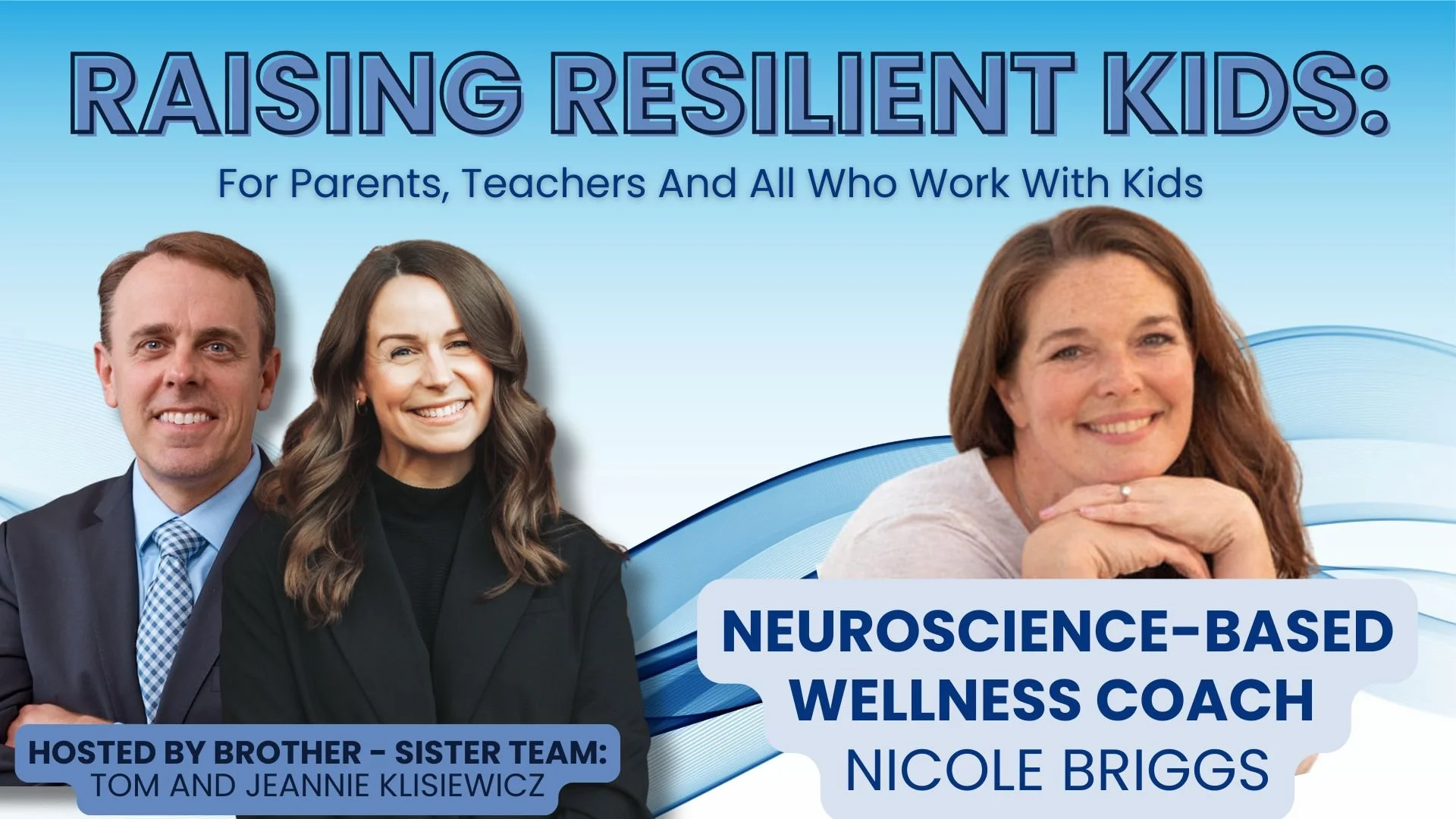
Check out the podcast on…



Are your kids glued to their screens, and you're not sure how to set limits without starting a battle? Wellness coach Nicole Briggs breaks down her screen time guidelines by age and explains why boredom isn't something to fix, but something to protect.
Nicole also reveals the two techniques that resonate most with the kids she coaches — minis and positive self-talk — and how she gets even the most resistant kids to buy in.
Finally, Nicole shares her favorite practical tool — the Energy Audit — a simple exercise that can help you identify what drains you and what fills you up, so you can show up as your best self for the kids in your life.
Whether you're a parent, teacher, coach or anyone who works with kids and teens, this episode is packed with actionable wisdom you can use today.
About Nicole Briggs
Nicole Briggs has been in the wellness industry for over 25 years and has had the privilege of helping more than 10,000 people — from teens to veterans — find relief from stress and reconnect with their health and well-being.
Her journey began with a Bachelor's degree in Neuroscience and a deep curiosity about the human mind and body. That curiosity led her to train at Harvard and Massachusetts General Hospital's Mind Body Medicine Program as a Positivity and Resilience Trainer. She is also a certified Life Coach.
Today, at Bella Viva Wellness, Nicole helps clients heal from the inside out — teaching them how to relax, unwind the effects of stress, and create real, lasting change. She is passionate about helping her clients learn how to manage stress, because when they do, something powerful happens — they rediscover joy, resilience, and better health.
Learn more at: https://www.bellavivacapecod.com/
Thank you!
Thank you for listening to the Raising Resilient Kids Podcast! We are siblings on a mission to help kids become their strongest selves. Each episode, we share proven strategies with parents, teachers, and all who work with youth and teens to build resilient, confident kids who can tackle life's challenges and thrive.
For more information on the podcast, or if you have a question you would like answered by one of our expert guests, please visit us at –
https://www.smarthwp.com/raisingresilientkidspodcast.
Special Thanks to Our Sponsors
Episode Transcript
Tom: [00:00:00] Are your kids glued to their screens and you're not sure how to set limits without a battle? Wellness coach Nicole Briggs shares her screen time guidelines by age, why kids just want someone to truly listen to them, and a powerful energy audit tool you can use today to show up better for the kids in your life. I'm Tom…
Jeannie: …and I'm Jeanie. We are siblings on a mission to help kids become their strongest selves. Each episode we share proven strategies with parents, teachers, and all who work with youth and teens to build resilient, confident kids who can tackle life's challenges and thrive. Welcome to the Raising Resilient Kids Podcast,
Tom: Alright Jeannie, I am incredibly psyched 'cause we have one of my favorite people on the planet with us today. And it's impossible, impossible to be in a bad mood when you're around this person.
Jeannie: All right. I already like them.
Tom: Yeah, that's a yes. Um, so we have Nicole Briggs. I actually met her through all of like the Benson Henry, the Harvard, the Massachusetts General Hospital training that I went through, you know, teach all [00:01:00] this resiliency stuff to kids and to adults and everything like that.
So she has gotten all the certifications. She's been doing a ton of work in her community around resiliency. Working with, with kids one-on-one, going into schools actually working with veterans too, and their families and all that stuff. And she's done a, a gone a lot deeper into some of the topics that I'm not as familiar with.
Phone use is a big one around your, around kids, you know, how, how much should you allow your kid to use it at what age and things like that. So I know that's a question.
Jeannie: That’s very hot topic. Yeah, absolutely.
Tom: Nicole has been in the wellness industry for over 25 years, and has the privilege of helping more than 10,000 people, from teens to veterans find relief from stress and reconnect with their health and wellbeing. Her journey began with a bachelor's degree in neuroscience, so she's also much smarter, not only nicer than me, but smarter than me. She has a deep curiosity about the human mind and body.
That curiosity led her. To train at Harvard and Massachusetts General Hospital's Mind Body Medicine program as a positivity and resiliency trainer, [00:02:00] and she's also a certified life coach. Today at Bella Viva Wellness, Nicole helps clients heal from the inside out, teaching them how to relax, unwind the effects of stress, and create real lasting change.
She's passionate about helping your clients learn how to manage stress because when they do something powerful happens. They rediscover joy, resilience, and better health.
And when not working with clients, she'll find her with her four kids that are fantastic. I hear all about 'em. They sound like they are amazing kids.
So Nicole, thank you so much for being here!
Nicole: Thank you. Thank you, thank you. It's such a pleasure to be here with both of you. That's great energy, such big smiles. Like it's just an honor to be here. So thank you for that beautiful introduction. I really appreciate that.
Tom: To start, let's, let's jump in. You know, the phone use was the one that you kind of weave that into a lot of your programs and everything. What would you say to, you know, the parents out there? What is the ideal age , you know, timing, what, what age, how much time when we're thinking about [00:03:00] phone use for our kids?
Nicole: I think, you know, just to be honest, I think it's something that all parents struggle with, myself included, trying to find that balance.
What I see is the more we give them, the more they get hooked. And that's intentional, right? So. It's really about setting those boundaries, understanding what's going on in the the cell phone technology world as the best that we can. I think something that as parents, we really forget that it's okay to not always be the cruise ship director for our kids.
That boredom is actually a really beautiful thing, right?
Jeannie: Yeah.
Nicole: From boredom comes relaxation, contemplation, creativity, problem solving, and these drones have taken us away from the whole art of being bored.
Tom: Yeah.
Nicole: And I just would love to invite parents to be, you know? Okay. With that.
When my kids come to me and they're like, I'm bored. I'm like, yes. Because in those [00:04:00] moments, as a kid, that's when I actually made up the best games. That's when I figured things out or contemplated my own life or who I was, you know. So I think that piece is really important for parents to just be mindful of. We don't have to manage every moment of their day or feel like they have to have something keeping them stimulated.
Sometimes less is more.
Tom: Yeah.
Nicole: One of my favorite books was The Anxious Generation. It's really powerful when see the, you know, the statistics and the studies that are being done and how kids have changed emotionally, behaviorally, and mentally from technology. What we know for sure is like zero to 24 months, kids do not need any technology, right?
Like they are so good at playing and keeping themselves busy. So I would say try to avoid during that timeframe, um, Anything between the ages of two and five. Very limited, maybe 30 minutes, make it educational. Their play is [00:05:00] their work. Yeah. That's all they need. And then 6- 12, 30 minutes, which I know sound surprising to some people.
But yeah, I would say is the max. Um, you know, that's still hard for people today. And then as teenagers, really one to two hours. And I see that like I feel like calling people FaceTiming and texting, those are the means of communication for teenagers that they need. And that's a lifeline that I don't see needing to have as strong of, you know, restrictions on.
Because like when I was a kid, I would like call people on the phone and talk for hours. Like that communication, we need to do that. We need that social interaction. So I think what I would really hesitate and or warn parents is that you don't want screens to ever replace their sleep, right? Their social connection, their time to do homework and family time.
That's kind of like those non-negotiables. And the other [00:06:00] piece I think is really important is that we as parents need to model the behavior that we are requiring because kids will, they're watching, they're watching what you say. If it doesn't match what you do, they're gonna be like, oh, I, but you do it, you know they're
They'll be the first to point it out to you. I think it's important for parents to remember like model the behavior that you want, set those boundaries and just be really clear with your intentions around what, when and where we're gonna use phones. What are the stipulations, you know, is it closing it down one hour before bed, family dinner time?
Um, all of that create your own, um, screen time rules. So in my family, it's no phones an hour before bedtime, so that doesn't interfere with your sleep. Um,
Tom: And then Nicole, do you actually have them keep their phones outside of their rooms?
Nicole: Yeah.
Tom: Okay.
Nicole: Yeah, I think it's a big one because the temptation is so great.
Jeannie: Totally.
Nicole: My phone, it's like candy [00:07:00] in your bedroom.
Tom: It’s addicting right?
Nicole: I've gotta eat. You know? And so I don't want them to have that temptation. Um, we always have dinners without screens. Right. It's just like they're put away that's our time to connect sometimes it's the only time we have to, to connect.
Tom: Yeah.
Nicole: And just really be present. When your kids are chatting with you, put your phone away. Just be present.
Tom: Yeah. Yeah. Thanks Nicole. Excellent, excellent. Kind of transitioning a little bit, I know you do a lot of one-on-one coaching with kids on these topics. Are there any, maybe, could you share a few techniques that you think seem to resonate with the kids you know you work with most?
Nicole: Yeah. I think you probably have very similar um, experience, but I think one of their favorites is the minis. They're just breathing exercises. They take them anywhere, anytime, but when they start realizing how much it's helping them. They can just do it right before an exam or do it before they start driving hours, whatever it is.
Tom: Yeah.
Nicole: That tends to be their favorite. And then I think the other one is, um, [00:08:00] positive self-talk. When you start asking kids, like, what are the things you're saying to yourself every day and you have them write it down. They don't realize how unkind they are to themselves. Yeah, they're, and they're like, wow.
I'm like, and then of course, like you would say, Tom, like, would you ever say that to your best friend? Like, whoa, but why are you saying it to yourself? Like, no. So it's a really great opportunity for them to reframe that and create either a neutral or positive statement. And they find, like they go back to that and they use it again and again before a sporting event or even before an exam. Like just changing the words that they're saying to themselves really impacts how they feel. And it's again, simple. I find kids love simple, simple, simple. Keep it easy.
Tom: Sometimes though, we'll say, Hey, you need to do this breathing technique, and you get a little bit of the roll of the eyes from the kids.
And the, you know, they, they is, is there anything you do to have them be more open to it?
Nicole: That's a great question. I think I always start with the end in mind and I'm like so [00:09:00] what's in it for you and. Well, first I'd love to geek out on this because when I teach stress, like I think my excitement gets kind of infectious because they're like, I should be really excited about this.
What's happening? You know? I love the topic. Um. But then it's really nice because I make it relatable to them. Like, what's happening? How is stress affecting you personally?
And so they kind of do that little inventory and then I'm like, okay, so would it be helpful if you found a way to just start lowering your stress levels?
How would you show up differently if you weren't so stressed or anxious ins these areas of your life. So I kind of get a little more buy-in from them because it's all about them. It's not just science, it's not just about breathing is good for you. It's,
I’s applicable to their situation, their life, and their experiences.
Tom: Would you say that, 'cause I know you know, you've got the background in neuroscience, a lot of the mind body connection stuff, a lot of that stuff might be a little bit, you know, over a kid's head. Is that the same thing you're doing where you're making it [00:10:00] relevant to them? Or how do you kind of introduce those topics?
Nicole: Yeah. Oh, I actually will talk about the prefrontal cortex. I talk about the amygdala because then they sound cool when they talk about it.
Jeannie: So true.
Nicole: The talk about it with their parents and their parents like, wait what? You know, and I think there's a cool factor to it. I mean, maybe. Me as a science geek, but I think there's something about it that even if it's just those two terms, right, where they latch onto understanding that and how those two parts of our brain are connected to our nervous system, right?
YAnd it just gives them a little bit of like, okay, there's some cool science here. Like, I'm gonna remember that, and then I do quiz them, so, so that's the best part. I'm like, remember this? Right. Like a little quiz at the end. I try to bring that passion into these topics. Because I think it's infectious.
I do personally, and I think I see them listening and paying attention a little bit more,
Tom: And now a word from our sponsors.
Jeannie: It's your young athlete struggling with nerves, [00:11:00] lack of confidence, or getting stuck in their head during competition. Mind of a Champion solves this. This program gives kids a mental toolkit to stay focused under pressure, bounce back from mistakes, and perform their best.
These aren't just sports skills, they're life skills. Check out the link in the show notes for more information. Back to the podcast.
Tom: Passion is, is so important. I know just from a little side note, like vacations that we go on, I, I wanna visit all the presidential museums. So whenever we go on vacation, I always drag my kids to a presidential museum and we always get a guided tour and they're always miserable about, when we go there. And at the end I'm like, did you have fun? They always say, yeah, that was fun. Yeah. Like why? Well, it's because of the passion of that person was volunteer. Probably a volunteer there. Talking about that president and everything they love about it. It just, it is, it's infectious.
So your, your coaching sessions, obviously we heard. They [00:12:00] include quizzes, which I'm glad I wasn't part of the coaching, coaching session, but, um, can you maybe talk us through kind of what that experience is like, how you structure those sessions?
Nicole: Yeah, sure. So, you know, I work either with groups, um, or I work one-on-one, so they're very different. But what I will say is I always meet the kids where they're at and we really take baby steps.
I might teach them some topics that are a little bit higher than where they might be at, but I'm not afraid to do that because. I'll reintegrate it again and again. We have a great workbook that we go through.
It's super colorful. We take little action steps. Every single week. And we just, you know, I want the kids to feel successful. I want them to master even the teeny little steps. 'cause we know like even 1% change over time adds up. So we just wanna move the needle a little bit and show them that success and that progress they'll want more.
And I find that when they're doing the work together, the group piece, and they share some of their [00:13:00] experiences, like there's power in that. 'cause that's that social. Right?
Jeannie: Definitely.
Nicole: When I work one-on-one, it's really great because I'm their cheerleader. Like I'm so excited for them as they figure these things out or they say like, oh, I actually used a mini right before my exam and guess what? It helped. And I'm like, oh, no way. Um, so yeah, we really just start where they are.
And the other thing I would say that's really important this day and age is that I really try to listen deeply to the students without looking for solutions.
Which is hard because I, as a parent, I'm a solution finder and what I've found more than ever is that kids just want somebody that listens to them. And I give that space, I hold that space for them to be able to do that, and that builds that rapport and that respect. I'm not there to solve all their problems.
I'm just there to support them with their stress [00:14:00] and with their problems.
Tom: That, that listening is, is, is so critical. And it's just, you know, life gets busy. So it's, it's kind of hard for us sometimes to do that. And sometimes it's even hard to draw the. Kid out. I know I've talked to other parents, even teachers too, where sometimes they'll introduce these concepts and then.
They can't listen because this kid just has a blank look and they, they really don't open up. Do you have any ways to kind of, that either the group classes or the individual classes that you're able to kind of draw kids out, be able to have them talk about some of these things?
Nicole: Yeah. I mean, mostly what I do is I just let them be where they are and I let them have that control and that autonomy over what they're experiencing because, you know, it's like bringing a, you know, a toddler to a grocery store who's having a tantrum, and then you're trying to like, talk them down about why they can't have the chocolate. It doesn't always work. So I do give them that space. Um, or what I'll do also is just, just be mindful of like, maybe they need to [00:15:00] switch gears and so we'll play a game.
And so just making it really light again, it takes them out of like what, whatever it was that shut them down to begin with. And then I just say like, you could participate or you not, it's okay. Like just be where you are and be okay with that. Like I respect that. We need to have permission to be able to just be where we're at and feel what we're feeling.
It's not always fun when they're not participating because I feel like I wanna teach them, but they're still listening. They don't always have to be active to get the information.
Tom: You especially learn that as your kids get older. I've realized that, that, you know, the things, I didn't think they were listening. Years later
They start doing it and I'm like, oh, okay, they, they were actually listening all this time.
Jeannie: I can, I can attest that his, his youngest daughter and she came out to visit me here in California for her spring break. And she talked about like a breathing technique that she had done before a test.
And I didn't even acknowledge like, oh, that sounds very your Dad of you, but I was just like, [00:16:00] she, How encouraging for Tom, she was listening all this time.
Tom: So, so do you know a lot of work with kids, but adults too. I know that the Heroes in Transition work that you do is so important. It's so wonderful. Can you talk to us about the adult stuff that you do and, and for the parents, the teachers, the coaches out there, what recommendations do you have for them to kind of incorporate this stuff, these self-care routines into their lives?
Nicole: Yeah, no, that's a great question. So, um, the work that I do with veterans has been really meaningful to me. There's a lot of PTSD there and there's a lot of struggles. Yeah, there's a lot of anxiety.
And so being able to teach these tools to them is really powerful for them, but it's powerful for all of us. And I think what I'm seeing right now is that educators and coaches are themselves super overwhelmed and dysregulated. They're super stressed. I mean, I don't know anybody today that's not feeling more stressed [00:17:00] than usual.
And so I think I'd love to see more of like that top-down approach. And I have had meetings at our school about the, the coaches and educators having more support themselves because how do we hold space for other people, especially students when they're dysregulated and they're stressed and anxious?
I just feel like it's so important if, if our educators and our coaches can get this support first and they can feel more filled up. Then there's a trickle down effect. Right. I will say at our school though, we did have a doctor come in who's working with all the coaches.
And I'm really excited about that 'cause he's been in the mental performance arena and he's really helping coaches try to understand how they show up and just what a privilege it is like.
You know, I think of like the work we do, Tom, you know, is like, I feel like we're coaches. We have this amazing privilege to help kids and like, I wanna show up as the best version of [00:18:00] myself.
If I'm drained and depleted I don't have a lot to give, you know? And same thing with my kids. Like, I wanna show up as the best version of myself. So how do I do that? Well, first and foremost, you have to take care of yourself.
Tom: This is great. This is great, Nicole. Listeners wanna learn more about your programs. Where can they connect with you? Can you share that with us?
Nicole: Yeah. So you can go to my website. Um, it's Bella Viva Cape Cod. That's where I'm located. bellavivacapecod.com/. So Bella viva means beautiful life. So helping people create a beautiful life from the inside out, like you alluded to in the beginning.
We have a wellness practice. We offer massage therapy and coaching, um, to kids, veterans, everything in between. Zero to whatever age. 'cause we need it, you know, we all need a little more support today. I, I need it. I have my own coaches. I always have a coach. I just feel like it really helps me get to the places that I want to be at, and somebody's holding space and listening deeply to me and I, you know, it's a beautiful thing when you can do that.
Tom: It [00:19:00] definitely, definitely is. So, can you give us one more, maybe a, a practical tip, one practical tip from, you know, what you do with kids or with the veterans or adults that, that you think it aoach, a teacher, a child could implement starting today?
Nicole: One of my favorite tools, I think is the energy battery tool.
What’s great to do is you just grab a piece of paper. Draw line, down the middle. On the left side, you're gonna put your energy drains, and on the right side you're gonna put the things that fill your, the bucket fillers or the energy fillers, and I want you to think about who are the people, the places, the events, the activities that drain your battery on one side.
And then the other side, write down all of the things that give you energy. What are the things that fuel you up, make you feel good, like give you more energy? So you complete the list and then what you do is you go back through one more time. And when you go through the second time, first you look at the energy drains.
You say, [00:20:00] what of these things can I delegate? Let go of? Or give myself space from. And then you look at the energy giving side and you say, what of these things could I be doing more of? Because I think our energy audit is really important as we move through the day. We are, we wake up with a certain amount of energy, right?
nd if we're constantly taking from the energy battery, we're gonna be depleted.
Jeannie: Yeah.
Nicole: But if we can have deposits in throughout the day, and we have to know what they are, and I always say awareness is the key to change. Like if you don't know how, are you gonna find ways to deposit into your, right.
I really want people to be able to know what it is that drains them, know what it is that fuels them back up. And just have a tool that they can work with every day and just kind of hang it somewhere so you can look at, be like, Ooh, I'm gonna be interacting with that person today. They're draining.
Maybe I step back a little bit, maybe I don't engage so much. It's just really managing our own self and knowing what works for [00:21:00] us and what doesn't work for us, and just holding true to that.
Tom: Nicole, this has been fantastic. You definitely are somebody on the positive side of my energy battery. So any, any final thoughts, words, advice, suggestions for the audience?
Nicole: Sure, yeah. Um, you know, I think if we could all just learn to slow down a little bit. It will be really nice. Put your phones away a little bit more. Be present. You'll never regret being present for people. Be okay to make mistakes and let your kids make mistakes. Listen deeply to loved ones, and I think ultimately just do more of what you love, like don't lose track of what's important to you and what you love to do. Just keep remembering yourself and what you love and and do it.
Tom: Yeah. Yeah. Wonderful advice. Nicole. Thank you so much.
Jeannie: Thank you so much, Nicole.
Tom: This has been great.
Nicole: You’re welcome. Such a pleasure to be with you two today. Thank you. [00:22:00] Thank you.
Jeannie: Well, Tom, once again, you know me so well. You know when I'm really gonna love somebody and boy did I love Nicole.
Tom: Yeah, I knew you would
Tom 4: So much of what she said. I, I just loved, but especially what she said at the end and where she kind of like gave like all these bullet points. I feel like if it was Nicole Briggs guide to life, and it would be all the things she said at the end, you know, slow down to be present, be okay to make mistakes.
When she was saying them. I was just thinking about how lucky her children are to have her wisdom. How lucky the people that she works with are to have her wisdom.It reminded me of little phrases that our dad used to say, and I know I felt that way about our dad. He used to always say to me, do what makes you happy. Remember what's important. Count your blessings. And I feel like those just coincide so well with Nicole's kind of guide to life and I just, I, that conversation made me so happy.
Tom: I love it. That's awesome. I'll give you a dad quote. Life is too short to be serious too long.
Jeanner: [00:23:00] Oh my God. Definitely another one of his.
Tom: When Pete and I were kids, he, when we used to ask him for money, he used to go, hold on, and then he would pretend like he was pooping out money and then hand it to us.
Jeannie: I bet you dad's up in heaven going, really? This is. Can we go back to the three original? No. He's actually loving that we're telling the story. He wants to be remembered by that last one as opposed to the three that I said. Now, what about for you, obviously, I know you're such good friends with Nicole, so you've learned a lot from her.
Is there anything, you know, new that you learned about or something that stuck out from this conversation?
Tom: Yeah. You know, like I told you from the beginning of me wanting to have her on the podcast, she's, she's just awesome. It's so important to be around great, positive, kind people. Mm-hmm. And she's definitely one that, that I love, you know.
To be around, to call up for, she's not too close to me, but I still get to talk to her, you know, a few times a year. To check in and things like that, so That's great.
So yeah, a lot of, a lot of great stuff, um, that I've heard from her [00:24:00] consistently over the years. Uh, the one that I, I guess I'll point out is maybe the boredom piece now that we're going into the summer, giving them time to be bored and knowing that that's okay and it's important experience to that, and that's where a lot of your, your best, most creative ideas come from when you're not constantly have something to do. SoI think that's what I'm gonna try to be a little bit more bored this summer and, and I guess I encourage everybody out there to, you know, to do the same with both them and their kids.
Jeannie: That is so, that is such another wise, uh, wise wisdom from, from Nicole.
Tom: Um, yeah, so I guess that's. It for season three. Thanks for doing this with me, Jeannie.
Jeannie: Of course. I love doing this so much. Another awesome season of incredible guests. We hope that you all have a wonderful summer. Thank you so much for listening, and we'll see you in September.